llms.txt, Schema and E-E-A-T: the technical foundation of AIO
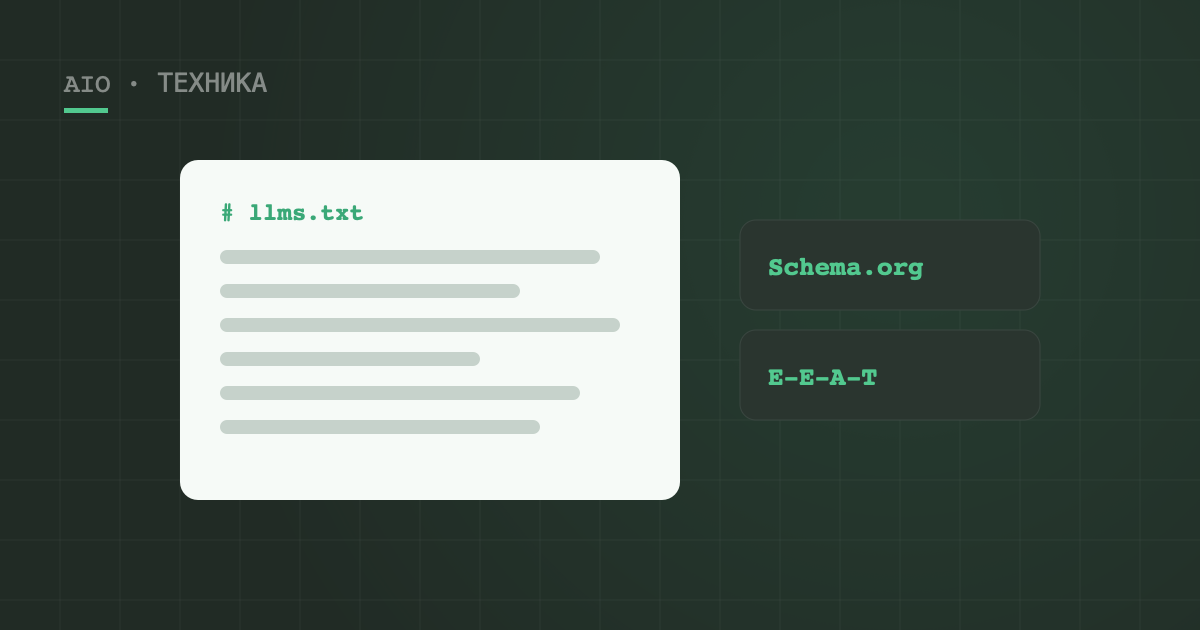
Before fighting for citation, your site must be readable to AI models. Three layers of technical preparation — from the llms.txt file to expertise signals.
Layer 1: llms.txt — site map for AI models
llms.txt is a markdown file in your site root that describes: who you are, which pages are key and where to find facts. It doesn't guarantee placement in answers, but removes the model's guesswork about site structure — and more crawlers read it every month. Also check robots.txt: GPTBot, ClaudeBot, PerplexityBot and Google-Extended must not be blocked if you want to appear in AI results.
Layer 2: Schema.org — facts in machine-readable format
- Organization + sameAs — links your site to profiles and directories, strengthening the brand entity.
- Product / Service with prices and ratings — what models pull into comparisons.
- FAQPage and HowTo — ready-made Q&A blocks that can be cited verbatim.
- Article with author and date — without these, content loses on freshness and attribution.
Layer 3: E-E-A-T — why you can be trusted
Experience, expertise, authoritativeness, trust. In practice: author pages with real names and credentials, links to primary sources, case studies with numbers, reviews on external platforms. Models 'weigh' this when choosing whom to recommend — especially in YMYL niches: healthcare, finance, law.
Then comes the content work — which we covered in our step-by-step plan for ChatGPT answers.